


HEALTHY HOME
Reducing Environmental Triggers for Autistic, PANS/PANDAS & Immune-Sensitive Children
For many children with autism, PANS/PANDAS, allergies, OCD, tics, anxiety, or sensory dysregulation, the home environment can either support recovery — or quietly maintain inflammation.
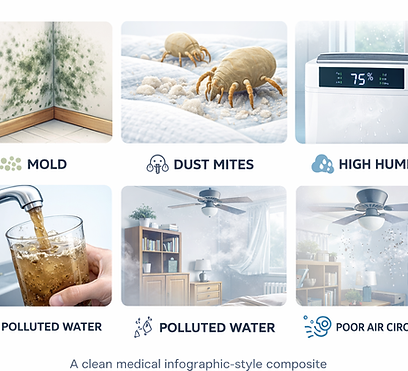
Environmental triggers such as mold, dust mites, humidity imbalance, water contaminants, and poor air circulation
Increased stimming or agitation
Sleep disruption
Brain fog and fatigue
OCD flares or intrusive thoughts
Tics or sudden behavioral regression
Chronic congestion, eczema, or cough
“Mystery” inflammatory flares
A healthy home reduces immune activation and lowers the background inflammatory burden.
Mold & Hidden Fungal Exposure
A Major Trigger for Neuroinflammation
Children with:
Immune dysregulation
Chronic infections
Elevated inflammatory markers
High mycotoxins
MCAS-like symptoms
PANS/PANDAS flares
are often more sensitive to fungal exposure than neurotypical children.
Why mold matters biologically
Fungal spores and mycotoxins may:
Activate mast cells
Increase cytokine production
Aggravate microglial activation
Disrupt sleep
Increase irritability and aggression
Worsen sensory sensitivity
Even low-level, chronic exposure can maintain immune activation.
Why mold matters biologically
Fungal spores and mycotoxins may:
Activate mast cells
Increase cytokine production
Aggravate microglial activation
Disrupt sleep
Increase irritability and aggression
Worsen sensory sensitivity
Even low-level, chronic exposure can maintain immune activation.
High-risk areas
Bathrooms and under sinks
Basements and crawlspaces
Around windows and AC units
HVAC drip pans
Behind drywall after leaks
Important principle:
If you smell mustiness, assume moisture exists — even if you cannot see mold.

What helps most:
Immediate repair of leaks
Removal (not just spraying) of water-damaged porous materials
Bathroom ventilation 20–30 minutes after shower
Keeping humidity under control
Humidity Control: One of the Most Important Interventions
Ideal humidity range: 40–50%
For PANS/PANDAS children:
Why this range matters for sensitive children:
Stable humidity helps reduce respiratory infections, which may otherwise trigger flares
Feeds mold growth
Hygrometer in bedroom
Allows dust mites to multiply
Dehumidifier in basement or humid climates
Increases indoor allergens
Controlled humidifier use only when needed
Humidity stability is more important than aggressive air treatments.
High humidity:
Worsens eczema and sinus inflammation
Irritates airways
Worsens sleep
Increases static dust circulation
Too low humidity:
Tools:
Dust Mites & Bedroom Inflammation Load

Dust mites are invisible but immunologically active.
For allergy-prone and PANS children, mite exposure can:
Increase IgE responses
Trigger histamine release
Worsen eczema
Contribute to nighttime agitation
Increase morning irritability
Most important steps:
Wash bedding weekly in hot water
Mite-proof mattress and pillow covers
Keep stuffed toys minimal and washable
HEPA vacuum weekly
Maintain humidity control
The bedroom should be the cleanest room in the house.

HVAC Systems & Air Circulation

Children with neuroinflammatory conditions often react to:
Stale air
Circulated dust
HVAC biofilms
Poor ventilation
Healthy HVAC checklist:
Replace filters regularly
Ensure no standing water in drain pans
Inspect for musty odor
Use HEPA air purifier in bedroom if possible
Ensure some fresh air exchange
Air purification supports but does not replace moisture control.

Water Quality & Immune Sensitivity

Water can influence skin, microbiome, and inflammation.
Some children with eczema, MCAS-like symptoms, or immune fragility may react to:
High chlorine exposure
Heavy metals in older plumbing
Poorly maintained well water
Consider:
Reviewing local water reports
Basic carbon filtration
Cleaning shower heads regularly
Optional shower filtration for sensitive skin
Water intervention does not need to be extreme — but awareness helps.
Humidifiers & Essential Oils

Use Carefully in Sensitive Children
Essential Oils: Not Always Neutral
Humidifiers can support comfort during dry seasons.
Many children with:
Autism
However, incorrect use may:
Raise humidity too high
Promote mold growth
Allow microbial growth inside the device
PANS/PANDAS
Mast cell activation
Sensory hypersensitivity
may react to strong scents!
Safe humidifier practices:
Monitor humidity daily
Clean device frequently
Empty tank when not in use
Avoid pushing humidity above 50–55%
Essential oils may:
Trigger headaches
Increase agitation
Provoke cough
Worsen sleep
Trigger mast cell activation
Humidity stability is more important than aggressive air treatments.
If essential oils are used, apply only very small amounts, diffuse briefly without daily constant exposure, stop immediately if symptoms increase, and remember that for some children a neutral air environment may be safer than aromatic intervention.
Environmental Stability & Nervous System Regulation
Children with autism and PANS benefit from:
Environmental unpredictability can increase:
Stable temperature
Meltdowns
Stable humidity
Tics
Stable sleep environment
Anxiety
Minimal sensory overload
Sleep disturbances
Consistency supports nervous system regulation.
Cleaning & Chemical Sensitivity

Children with neuroinflammation may be more reactive to:
Strong fragrances
Air fresheners
Aggressive chemical sprays
Preferred approach:
Fragrance-free products
Ventilation during cleaning
Damp-dusting (not dry dusting)
HEPA vacuuming
These may worsen:
OCD flares
A healthy home is clean — but not chemically overloaded.
Anxiety
Headaches
Sensory overwhelm
Humidifiers & Essential Oils

Air
HEPA purifier in bedroom
No musty odor
Good ventilation
Humidity
Hygrometer installed
Final Principle
For autistic children, PANS/PANDAS patients, and allergy-prone kids:
Reducing environmental immune triggers lowers baseline inflammation.
Lower inflammation supports:
Better sleep
Improved regulation
Fewer flares
More stable progress during treatment
A healthy home is not about perfection.
It is about reducing avoidable triggers.
40–50% range
No condensation
Mold
No leaks
No damp drywall