


HOME / Parent portal / I am new here / Why biology matters in autism

Why biology matters in autism
Inflammation, immunity, infections, metabolism
Autism is not only about behavior in many children, but symptoms also reflect biological processes inside the body, often present long before behavioral or developmental changes become visible. This page explains why understanding biology is essential, how biological systems influence symptoms, and why meaningful clinical decisions require more than observation alone.
Autism is a Biological Condition
01

Improvement during treatment is rarely linear
Autistic symptoms do not arise in isolation from the body. They reflect how the brain, immune system, metabolism, and nervous system interact over time. Behavioral features such as:
Regression
Irritability
Sleep disturbances
Loss of speech or developmental skills
Sensory hypersensitivity
Often correlate with biological stressors, not just learned or conditioned behaviors. Understanding these biological contributors does not come from behavior analysis alone.
This understanding is formed during the consultation, where Dr. Ken:
Reviews the child’s medical and developmental history
Analyzes available laboratory data
Correlates laboratory findings with clinical presentation and symptom dynamics
It is this analytical integration of laboratory data and clinical observation that helps explain:
Why symptoms fluctuate?
Why do they often worsen during illness or immune stress?
Why do some children partially improve when underlying biological processes are addressed?
Inflammation and Neuroinflammation
02

Inflammation is one of the most common biological mechanisms observed in autistic children It may involve:
Systemic inflammation
Neuroinflammation affecting the brain
Inflammatory responses triggered by infections or an immune imbalance
Chronic inflammation can interfere with:
Neuronal signaling
Synaptic development
Neurotransmitter balance
Emotional and cognitive regulation
When inflammation persists, behavioral approaches alone cannot address its effects.
Immune System Imbalance
03
Many children with autism show signs of immune dysregulation. This may include:
Immune overactivation
Immune suppression
Imbalance between different immune cell populations
An unstable immune system may:
Fail to control infections effectively
Remain in a constantly activated state
Contribute to ongoing inflammation and fatigue

This helps explain why some children experience regression or worsening of symptoms during periods of immune stress.
Chronic and Latent Infections
04

Some infections do not cause acute illness but remain persistent or latent in the body. These infections may:
Reactivate under stress
Sustain chronic inflammation
Affect the nervous and immune systems over time
Without targeted evaluation, these contributors often remain unrecognized, despite their significant clinical impact.
Metabolism and energy balance
05
The brain is one of the most energy-dependent organs in the body.
Metabolic imbalance may affect:
Mitochondrial function,
Energy production,
Detoxification pathways,
Nutrient utilization.
When metabolic systems are under stress, children may present with:
Fatigue,
Poor attention,
Irritability,
Stagnation or loss of skills.

These processes cannot be identified through behavior-based assessment alone.
Why behavior-only approaches are limited
06

Behavioral therapies address external adaptation, not internal biological drivers.
They do not:
Reduce inflammation
Correct immune imbalance
Address infections
Restore metabolic stability
When biology is not addressed, progress may plateau or regress — not because therapy fails, but because underlying mechanisms remain active.
How Autism Navigator approaches biology
07
The Autism Navigator framework is built on clinical reasoning, not universal protocols
It emphasizes:
Individualized evaluation,
Laboratory data analysis,
Clinical observation over time,
Cautious, evidence-informed decision-making

Biology does not replace behavioral support — it defines its limits and potential.
What this means for families
08
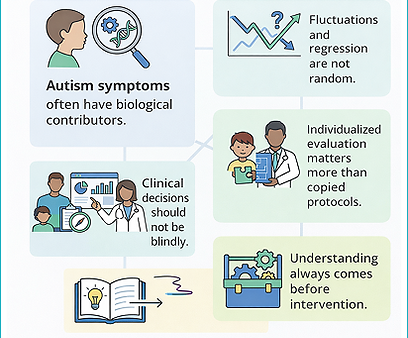
Understanding always comes before intervention
Autism symptoms often have biological contributors
Fluctuations and regression are not random
Clinical decisions should not be made blindly
Individualized evaluation matters more than copied protocols
Understanding always comes before intervention