


Autism and Aggression: Biological Causes and Potential Treatment Options


Aggression in Autism Is More Than a Behavioral Problem
Aggressive behavior occurs in some autistic children, adolescents, and adults. It may include hitting, biting, throwing objects, severe emotional outbursts, or self-injury.
These episodes can be frightening and exhausting for families. They may interfere with education, sleep, and everyday life.
However, it is important to understand:
Aggression is not a defining characteristic of autism, and aggressive behavior should not automatically be interpreted as intentional misconduct.
In many cases, aggression is a response to overwhelming stress, pain, sensory overload, communication difficulties, or an inability to regulate emotional and physiological reactions.
Co-occurring medical, psychiatric, or neurological conditions may also contribute. Effective care therefore begins not with suppressing behavior, but with investigating its underlying causes.
1. What Happens in the Brain During Aggression?
Aggression is not controlled by one specific area of the brain. It emerges through interactions among systems involved in threat detection, emotional processing, impulse control, stress responses, and behavioral regulation.
The Prefrontal Cortex
The prefrontal cortex supports decision-making, planning, emotional control, and inhibition of impulsive reactions.
The orbitofrontal cortex helps evaluate situations and anticipate consequences. The ventromedial prefrontal cortex contributes to emotional regulation and communicates with the amygdala. The dorsolateral region supports attention, working memory, and the ability to switch between tasks.
Difficulties in these functions may reduce tolerance for frustration, interruptions, and unexpected changes.
The Amygdala
The amygdala processes signals related to fear, uncertainty, and potential danger.
When threat-detection systems become excessively reactive, loud sounds, unexpected touch, changes in routine, or unfamiliar environments may feel threatening or intolerable.
In such situations, aggressive behavior may represent a defensive reaction rather than deliberate hostility.
Stress and Physiological Arousal
The hypothalamus and brainstem coordinate physiological responses to stress. The locus coeruleus in the brainstem is one of the brain’s primary sources of norepinephrine.
Excessive activation of these systems may increase heart rate, muscle tension, vigilance, and emotional reactivity.
The basal ganglia and striatum influence behavioral selection and the ability to shift between activities. Reduced behavioral flexibility may increase frustration.
Key concept: Aggression may occur when systems generating emotional and defensive responses overwhelm the systems responsible for regulating them.

2. Neurotransmitters and the Balance of the Nervous System
Neurotransmitters influence neuronal activity, emotional regulation, anxiety, motivation, and impulse control.
Serotonin participates in mood regulation and behavioral inhibition. Altered serotonergic signaling has been associated with impulsive aggression, but serotonin levels alone cannot explain aggressive behavior.
Dopamine affects motivation, attention, reward processing, and behavioral flexibility.
Glutamate is the brain’s primary excitatory neurotransmitter, while GABA is its primary inhibitory neurotransmitter. An altered balance between excitation and inhibition may affect sensory processing and emotional regulation.
Norepinephrine contributes to stress responses and vigilance. Excessive noradrenergic activity may amplify emotional reactions and make recovery after a stressful event more difficult.
It would be inaccurate, however, to assume that every autistic individual has the same neurotransmitter imbalance. Biological differences vary by individual, age, developmental stage, and brain region.

3. Hormones, Stress, and Sleep
Hormonal systems interact closely with the brain circuits that regulate emotions and behavior.
The hypothalamic-pituitary-adrenal axis coordinates the body’s hormonal response to stress:
Hypothalamus → Pituitary gland → Adrenal glands → Cortisol release.
Abnormal cortisol regulation may make it more difficult to recover from stressful situations. However, a single abnormal cortisol measurement does not establish the cause of aggression.
Adrenaline and norepinephrine participate in the fight-or-flight response. Increased sympathetic activation may produce a rapid heartbeat, muscle tension, vigilance, and heightened emotional reactivity.
During adolescence, these factors may be compounded by hormonal changes and continued brain development. Nevertheless, aggression cannot be explained solely by elevated testosterone, and hormonal suppression is not an established treatment for autism-associated aggression.
Sleep deserves particular attention. Sleep disorders are common in autism and may significantly worsen irritability and impulsivity. For some individuals, improving sleep can meaningfully reduce behavioral difficulties.
4. The Possible Role of Neuroinflammation
Neuroinflammation refers to immune-related processes within the central nervous system. It involves microglia, astrocytes, neurons, and inflammatory mediators.
Research has identified altered immune and glial signaling in some autistic individuals. These findings suggest that neuroimmune processes may contribute to certain aspects of autism biology.
Microglia participate in immune surveillance, synaptic remodeling, and responses to injury. Astrocytes regulate neurotransmitter metabolism and help maintain a stable environment for neuronal function.
Dysregulation of these cells could theoretically affect neurotransmission, neural excitability, and emotional regulation.
A proposed biological pathway is:
Immune dysregulation → altered inflammatory signaling → changes in neurotransmitter regulation and neuronal function → impaired emotional regulation → increased susceptibility to aggressive reactions.
This model is biologically plausible but remains incompletely validated.
Neuroinflammation has not been established as a universal cause of autism or aggression. Elevated inflammatory markers in blood do not necessarily indicate inflammation in the brain, and normal markers cannot independently exclude a central neuroinflammatory process.
5. Why Aggression May Begin or Become More Severe
New or worsening aggression should not automatically be attributed to autism.

Possible contributors include:
sleep disorders;
constipation, reflux, and other gastrointestinal problems;
dental pain, headaches, or other sources of pain;
seizures and other neurological conditions;
anxiety, depression, ADHD, or mood disorders;
sensory overload;
inability to communicate pain or discomfort;
medication changes or adverse effects;
hormonal changes;
increasing social or environmental demands;
selected infectious, endocrine, metabolic, or inflammatory conditions.
When behavior changes suddenly, a medical cause should be considered and appropriately evaluated.
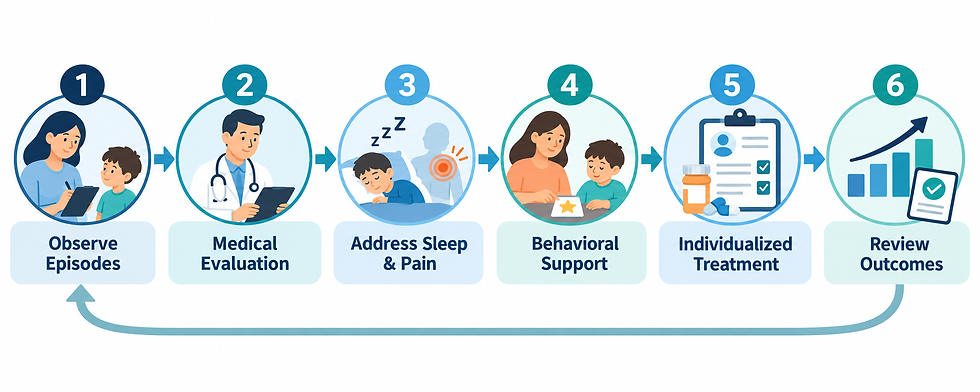
6. A Step-by-Step Approach to Treatment
Treatment should not focus exclusively on suppressing behavior. It should aim to reduce distress, address treatable causes, and improve emotional regulation.
Step 1: Understand the Aggressive Episodes
Important questions include:
Did the aggression begin suddenly or gradually?
What usually happens before an episode?
Does it occur during particular activities or transitions?
Is it associated with pain, illness, or disrupted sleep?
Does it follow sensory overload?
Can the individual communicate discomfort?
Were medications or dosages recently changed?
Are there signs of anxiety or excessive physiological arousal?
Structured observation may help identify recurring patterns.
For severe aggression, an immediate safety plan is essential to protect the autistic individual and others.
Step 2: Investigate Medical and Neurological Causes
A medical evaluation should consider possible sources of pain, sleep disorders, gastrointestinal problems, dental disease, seizures, infections, and medication adverse effects.
Additional testing should be selected according to the person’s history and clinical findings. There is no validated routine blood test that can determine whether aggression in autism is caused by neuroinflammation.
Step 3: Address Identified Problems
Support may include:
improving sleep routines;
treating pain and medical conditions;
addressing gastrointestinal problems;
reducing sensory overload;
improving communication support;
modifying environmental demands;
providing behavioral support.
Step 4: Evaluate Inflammatory and Immune-Related Conditions
If clinical findings suggest an inflammatory, autoimmune, or infectious condition, appropriate diagnostic evaluation is necessary.
Anti-inflammatory or immunomodulatory treatment should be used only for a clinically supported indication.
Routine empirical use of anti-inflammatory medication for aggression is not established practice. These medications may cause gastrointestinal injury, kidney complications, metabolic problems, or increased infection risk.
Step 5: Consider Medication When Necessary
Medication may be appropriate for severe and persistent irritability or aggression when behavioral and environmental interventions are insufficient.
Risperidone and aripiprazole have the strongest established evidence and FDA approval for irritability associated with autistic disorder in specified pediatric age groups.

They may reduce severe irritability and related aggressive behavior, but they can also cause weight gain, metabolic abnormalities, sedation, and movement-related adverse effects.
Treatment decisions should be individualized and accompanied by appropriate monitoring.
7. Additional Treatments Under Investigation
At Autism Navigator, we recognize that different biological mechanisms may contribute to aggression in different individuals.
In selected cases, we have observed reduced irritability or aggression during individualized treatment that included propranolol, memantine, lisinopril, or anti-inflammatory therapies.
These observations may help generate clinical hypotheses, but they do not prove that a particular medication caused the improvement or that the same approach will benefit others.
Propranolol
Propranolol reduces certain physiological effects of adrenaline and norepinephrine.

Because excessive adrenergic activation may contribute to hyperarousal, propranolol has been investigated as a potential treatment for severe aggression.
Small controlled studies have reported preliminary benefits in selected autistic individuals. However, the evidence remains limited, and propranolol is not FDA-approved for autism-associated aggression.
It may reduce heart rate and blood pressure and can cause fatigue or bronchospasm. Careful monitoring is especially important for people with asthma or cardiovascular conditions.
Lisinopril
Lisinopril is primarily used to treat hypertension and certain cardiovascular conditions.

The renin-angiotensin system, which lisinopril affects, regulates more than blood pressure. It also participates in vascular function, oxidative stress, and inflammatory signaling.
Experimental evidence suggests that modulation of this system may influence neuroinflammatory processes.
In our clinical practice, several autistic individuals with aggressive behavior have shown improvement during treatment that included lisinopril. However, the proposed biological mechanisms have not been proven to explain these improvements.
Controlled clinical studies are needed to determine whether lisinopril has a reproducible effect on aggression in autism.
Lisinopril is not an established or FDA-approved treatment for autism-associated aggression. It may cause low blood pressure, kidney dysfunction, elevated potassium, cough, and rare but serious angioedema. It is contraindicated during pregnancy.
Memantine
Memantine affects glutamatergic neurotransmission through NMDA receptors.

Research on memantine in autism has produced mixed results, and evidence supporting its use specifically for aggression remains insufficient.
Our clinical experience suggests that selected individuals may show behavioral improvement during treatment incorporating memantine, but these observations require systematic evaluation.
Possible adverse effects include dizziness, headache, confusion, and increased agitation.
Guanfacine and Clonidine
Guanfacine and clonidine influence sympathetic activity and noradrenergic signaling.

Guanfacine may reduce hyperactivity and impulsivity in some autistic children. These medications may be considered when aggression is associated with significant impulsivity or hyperarousal.
They can cause sedation, low blood pressure, and a reduced heart rate.
Anti-Inflammatory Therapy
When an individual has a diagnosed inflammatory or immune-mediated condition, appropriate treatment may improve overall health and reduce related behavioral distress.

However, anti-inflammatory medications are not established routine treatments for aggression in autism. Their use requires a medical indication and careful assessment of potential benefits and risks.
8. Why Treatment Must Be Individualized
Two autistic individuals may display similar aggressive behavior for entirely different reasons.
One may become aggressive because of anxiety and physiological hyperarousal. Another may be reacting to pain, gastrointestinal discomfort, or sleep deprivation. A third may be experiencing communication difficulties or sensory overload.

The same treatment should not automatically be given to everyone.
An individualized approach considers developmental history, medical conditions, current medications, behavioral patterns, communication abilities, sensory regulation, and previous treatment responses.
Treatment outcomes should be monitored over time using clearly defined measures.
9. What Parents Can Do
Parents can help identify patterns by keeping a simple daily record.

Document:
when episodes occur;
their duration and severity;
possible triggers;
sleep quality;
signs of pain or illness;
medication changes;
what helped the individual recover.
Improvements should also be recorded, including fewer episodes, faster recovery, better sleep, and improved participation in daily activities.
For severe aggression, families should work with qualified professionals to develop a safety plan that protects the autistic individual and others without relying on punishment.
Sudden severe behavioral changes—especially when accompanied by fever, confusion, seizures, significant pain, or other acute neurological symptoms—require prompt medical assessment.
Parents should not start, stop, or combine prescription medications based solely on information from an educational article.
Conclusion: Aggression Is a Signal That Deserves Investigation
At Autism Navigator, we approach aggression as a complex clinical manifestation that may involve neurological, physiological, medical, environmental, and, in selected cases, immune-related mechanisms.
Promising clinical observations must be clearly distinguished from treatments supported by controlled clinical evidence.
Aggression should not be viewed solely as a disciplinary problem. It may be associated with pain, sleep deprivation, communication difficulties, anxiety, sensory overload, and other causes that can potentially be identified and treated.
The goal is not simply to suppress behavior. It is to understand the source of distress, restore as much emotional and physiological stability as possible, and improve quality of life for autistic individuals and their families.
Medical disclaimer: This article provides general educational information and does not replace individualized medical advice. Some treatments discussed are off-label or investigational and are not established therapies for aggression in autism. All prescription medications require appropriate clinical assessment, supervision, and monitoring. If there is an immediate danger or risk of serious injury, seek urgent professional assistance.
Comments