DARK TEETH OR BLACK TONGUE DURING TREATMENT

(Doxycycline & Minocycline)

Overview:
During treatment, some children may develop:
• Darkening of teeth
• Black or brown coating on the tongue
• Changes in oral appearance
This can be concerning for parents — however, in many cases, this is a known and manageable effect of tetracycline-class antibiotics.
Most commonly seen with:
• Doxycycline
• Minocycline
These medications remain highly effective in treating chronic and intracellular infections, often present in the biological picture of autism.
Why Does This Happen?
1. Binding to Calcium (Tooth Staining)These antibiotics bind to calcium and may deposit in:
• Tooth enamel
• Dentin
Resulting in gray, brown, or dark discoloration, especially with prolonged use.

Sunlight Reaction (Photosensitivity)
Particularly with doxycycline:
• UV exposure may increase oxidative reactions
• This can intensify pigmentation and skin sensitivity

Black Tongue (Microbiome Shift)
Also known as black hairy tongue
Caused by:
• Altered oral microbiome
• Fungal overgrowth
• Reduced shedding of tongue epithelial cells
✔️ Reversible and not harmful
Minocycline-Specific Pigmentation
May cause:
• Gray or bluish discoloration of teeth, gums, or mucosa
Mechanism:
• Formation of pigment complexes (including iron-containing compounds)
Is This Dangerous?
In most cases:
• This is a cosmetic effect
• Tooth structure is not damaged
However, in younger children (with developing teeth), discoloration may persist longer.
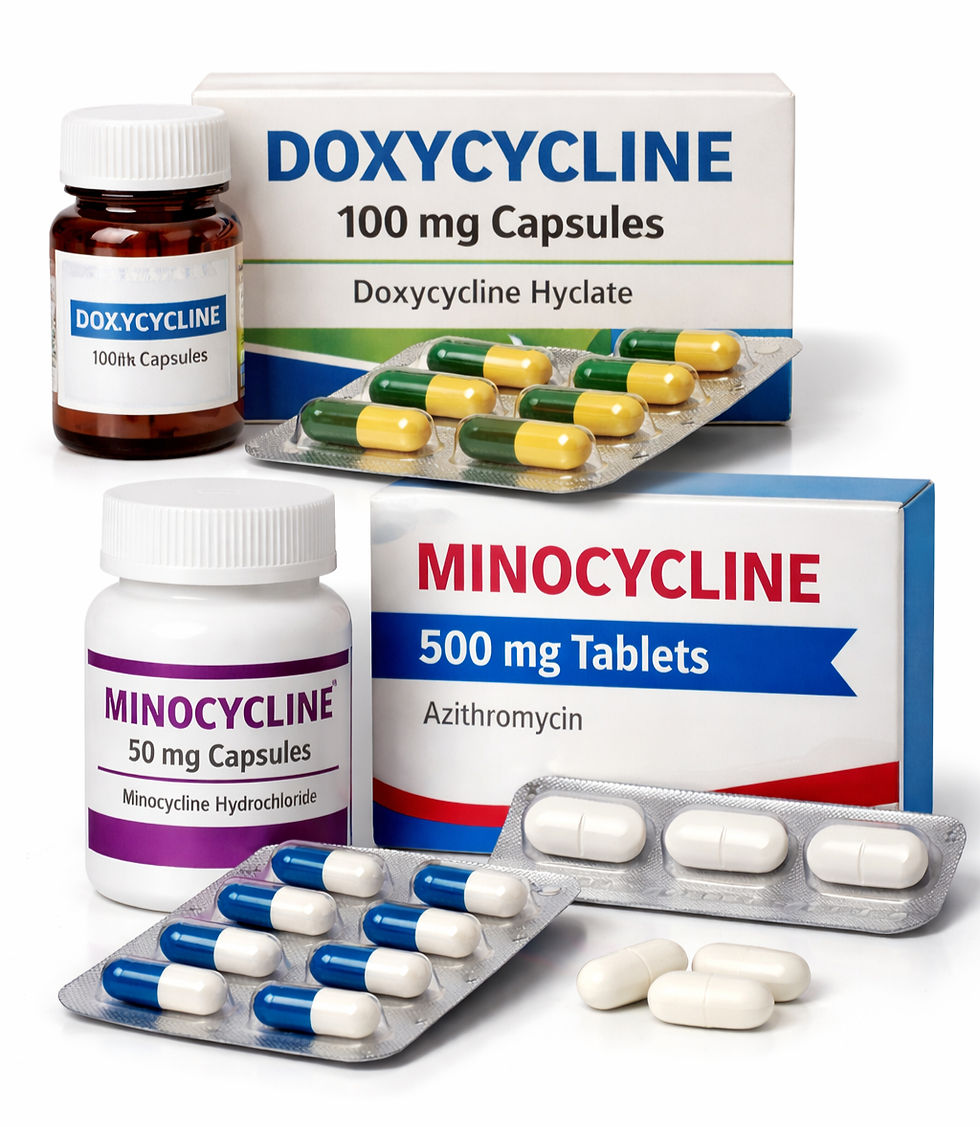
Why Do We Use These Antibiotics?
They target difficult pathogens:
• Mycoplasma pneumoniae
• Chlamydia pneumoniae
• Lyme-related organisms
They also provide:
• Anti-inflammatory effects
• MMP-9 inhibition
• Neuroprotective properties
➡️ Clinically valuable in:
• Autism
• PANS/PANDAS
• Chronic infection-associated inflammation
Alternative Options

What Parents Should Do
• Maintain good oral hygiene
• Gently clean the tongue (if tolerated)
• Limit excessive sun exposure
• Continue treatment unless advised otherwise
Key Takeaway
These changes may appear alarming but are:
• Expected effects of tetracycline antibiotics
• Often temporary and manageable
• Not a sign of treatment failure
If clinical improvement is observed, continuation with monitoring is often appropriate.
FAQ
Is the staining permanent?
Often improves after treatment, but prolonged use in young children may lead to longer-lasting changes.
Should I stop the medication immediately?
No — always consult your physician first.
Is black tongue dangerous?
No — it is temporary and reversible.
Can this be prevented?
Good oral hygiene and sun protection may reduce severity.


Comments